NESA Stage 6 Assessment Changes: Navigating the New Health and Movement Science Landscape
Understanding the Latest NESA & ACE Updates for HMS
The recent changes to ACE requirements offer schools greater flexibility around how and when they assess components of the Health and Movement Science (HMS) course. While the Collaborative Investigation (CI) and Depth Studies (DS) no longer need to be formally assessed, there is a compelling case for keeping them as core, assessable experiences in your program. For comprehensive details on the latest syllabus structure and requirements, visit the official HMS syllabus overview on the NESA website.
We’re in a new era of curriculum—one that places deep learning, transferable skills, and real-world application at the centre of teaching. The CI and DS are not just add-ons or time fillers; they are powerful vehicles for engaging students in the kind of learning that matters.
Why Assess the CI and DS in Health and Movement Science?
Assessing the CI and DS allows you to:
- Authentically assess essential syllabus skills like collaboration, critical thinking, problem-solving, communication, and research—not just recall. See mapped skills and tasks in the HMS Sample Assessments.
- Elevate student engagement by creating space for voice, choice and meaningful inquiry.
- Move beyond rote learning and rehearsed answers to foster independent thinkers who can transfer knowledge into new and unfamiliar contexts.
- Innovate boldly with task types that break free from traditional exams and essays—encouraging creativity, initiative, real-world relevance and depth of knowledge.
- Provide rich, memorable learning experiences that reflect the intention of the HMS syllabus and prepare students for both the HSC and life beyond school. For teaching ideas, visit the teaching and learning support page.
These aren’t just learning experiences. They are opportunities to do assessment differently, aligning with the future-focused direction of Stage 6 learning.
If you want practical strategies and support for navigating and implementing these changes, see our guide: come along to our upcoming HMS Q&A.
How to Implement Assessable Experiences in HMS
So, what might these assessable experiences look like in practice? The NESA Collaborative Investigation guide and our Collaborative Investigation Resources and Video Series offer excellent support for implementation.
Below are six flexible task types—three suited to the Collaborative Investigation and three for the Depth Studies—that go beyond traditional assessment formats. These task types are designed to align with the HMS syllabus, support mandated hours, and provide meaningful opportunities for students to apply their knowledge and skills in creative, authentic ways.
Sample Assessment Task Ideas for HMS
Collaborative Investigation
| Task Title | What’s Involved | Skills Developed | Strengths | Policy Alignment |
|---|---|---|---|---|
| Community Design Sprint | Students work in groups to design a health or movement initiative for a target group using research and user insights. | Collaboration, planning, inclusive design, problem-solving | Real-world problem-solving; encourages empathy and creative thinking | Meets 20-hour CI requirement; builds collaborative and design skills aligned with outcomes HM-11-05 and HM-11-09 |
| Advocacy Campaign Challenge | Groups create a campaign on a chosen issue, developing messaging, visuals, and a call to action to promote behaviour change. | Research, communication, teamwork, media literacy | Engages students in social advocacy and systems thinking | Aligns with health promotion focus and skills in HM-11-03 and HM-11-08 |
| Collaborative Podcast Series | Students plan and produce 2–3 short podcast episodes on a health or movement issue relevant to peers. | Collaboration, oral communication, synthesis, inquiry | Student voice is amplified; fosters media and communication skills | Aligns with inquiry-based learning and collaborative outcomes in HM-11-01 and HM-11-06 |
Depth Studies
| Task Title | What’s Involved | Skills Developed | Strengths | Policy Alignment |
|---|---|---|---|---|
| Tech Trial – Innovation in Action | Students trial and evaluate a piece of health or movement-related tech using defined criteria. | Problem-solving, evaluation, personal inquiry | High student engagement; supports real-world application of syllabus concepts | Aligned with syllabus focus on innovation, technology and individualised learning (HM-12-02, HM-12-08) |
| From Policy to Practice | Students investigate the intent and implementation of a national or community-based health policy. | Research, analysis, application, evaluation | Builds links between abstract policy and practical outcomes | Fulfills 30-hour DS requirement; deepens understanding of equity, systems and strategies (HM-12-06, HM-12-09) |
| Comparative Issue Analysis | Students compare how a health or movement issue affects two populations and propose strategies to address disparities. | Critical thinking, synthesis, equity lens, research | Supports depth of understanding and perspective-taking | Reinforces focus on equity, health determinants and strategy development (HM-12-04, HM-12-06) |
For even more practical assessment examples, visit the Department of Education’s sample assessments.
In-Depth Task Example: Media or Communication Project
Task Type: Media or Communication Project (Collaborative Investigation)
Task Outline: In small groups, students research a relevant health or movement issue and create a media product (e.g. podcast, video, infographic) designed to educate or influence a target audience.
Suggested Task Weighting: 20%
Skills Covered: Collaboration, research, communication, critical thinking, problem-solving
Benefits to Students:
- Encourages creativity and student voice
- Builds real-world communication and teamwork skills
- Reinforces content understanding through peer explanation and audience targeting
- Provides an engaging alternative to written reports or presentations
More on delivering and assessing Collaborative Investigations can be found in the official guide and our video series.
Your Next Steps: HMS Assessment Policy, Support, and Resources
Still have questions about what the assessment changes mean for you? We’ll break down what the changes really mean in practice, answer your questions, and explore confident navigation of assessment in the new HMS landscape in our upcoming Q&A session. We’d love you to join us!
For additional hands-on resources explore our:
For the most up-to-date policy and sample documentation, always check the official Health and Movement Science assessment portal.
Continue the Conversation at Our Conference
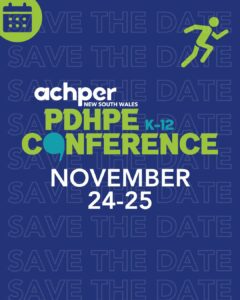
Want to explore these changes in more depth and hear how other schools are responding? Join us at the ACHPER NSW K–12 PDHPE Conference this November. It’s your chance to connect with colleagues, dive into practical sessions, and shape the future of PDHPE together.