
Bringing Big Data to Life in the HMS Classroom
Big data is more than a technological trend or buzzword, it is transforming how we understand, prevent, and treat disease, as well as how health systems are funded and delivered in Australia. For Health and Movement Science (HMS) teachers, big data is not only part of the Stage 6 syllabus, but also a powerful way to help students engage with contemporary health challenges and opportunities.
This blog explores how big data is shaping the health of Australians, with explicit links to syllabus outcomes and a practical classroom investigation that can be embedded directly into HMS lessons.
What is big data in health?
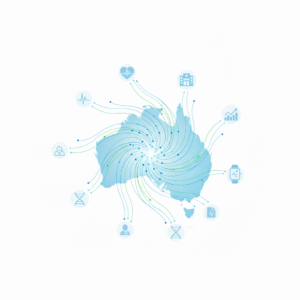
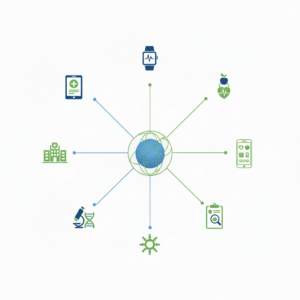
Big data refers to extremely large, complex datasets that cannot be analysed through traditional methods. In health, this includes information from electronic health records, hospital admissions, pathology results, genomic sequencing, population health surveys, and increasingly from wearables, apps, and digital devices.
Big data allows health professionals, researchers, and policymakers to:
- Identify patterns and risk factors across populations.
- Develop predictive models to anticipate disease and guide interventions.
- Evaluate the effectiveness of health programs and policies.
- Provide more personalised treatment and management of disease.
For teachers, big data offers an authentic context to help students critically evaluate how advances in technology shape health outcomes, both positively and negatively.
How is big data being used in health?
Big data already influences everyday health in Australia:
- Population health monitoring – The Australian Institute of Health and Welfare (AIHW) and Australian Bureau of Statistics (ABS) track prevalence of chronic disease, risk factors such as smoking and obesity, and social determinants of health (AIHW, 2024; ABS, 2022).
- Real-time health tracking – Digital health technologies, such as continuous glucose monitors or heart rate sensors, provide constant feedback that supports better management of conditions like diabetes or arrhythmias (AIHW, 2023).
- Predictive analytics – Hospitals are using machine learning models to predict which patients are most likely to be readmitted, allowing earlier intervention (OECD, 2021).
Case study – COVID-19 surveillance
During the pandemic, big data was central to monitoring case numbers, predicting outbreaks, and managing vaccination rollouts. At the same time, the COVIDSafe app showed how public trust, data quality, and uptake influence the effectiveness of big data initiatives.
How is it reducing healthcare spending?
Healthcare spending in Australia continues to rise, now consuming more than one-tenth of the nation’s total economic resources (AIHW, 2024). Big data is seen as a solution to manage costs while improving outcomes:
- Preventive focus – Predicting health risks early means resources can be directed toward prevention rather than treatment.
- Example: Data from the National Health Survey shows higher obesity rates in younger Australians. Governments use this information to invest in preventive programs, such as healthy school canteens and physical activity initiatives, rather than waiting until chronic conditions like type 2 diabetes develop.
- Reduced duplication – Shared digital health records mean patients don’t need repeated tests when moving between providers.
- Example: A patient who has a blood test at a regional hospital can have the results uploaded to My Health Record. If they later attend a metropolitan specialist, the doctor can access the same test results securely, avoiding the cost, inconvenience, and delays of repeating the test.
- Efficiency gains – Hospitals use data to optimise operating theatre schedules, reduce waiting times, and allocate staff more effectively (Belle et al., 2015).
- Example: NSW hospitals have used predictive modelling of surgery times to better plan operating lists. By matching staffing and theatre availability to actual demand, hospitals can perform more surgeries each day and reduce cancellations.
- Avoiding unnecessary admissions – Predictive analytics for chronic conditions like COPD and diabetes reduce costly hospital readmissions (Raghupathi & Raghupathi, 2014).
- Example: Some hospitals analyse data from past admissions to flag patients at high risk of returning within 30 days. These patients may be given additional follow-up care, medication reminders, or telehealth check-ins, reducing readmission rates and freeing up hospital beds.
The challenge for students to consider is whether savings generated by big data are equitably redistributed into preventive health, or concentrated in acute care.
How is it being used to cure and manage disease?
The most exciting frontier for big data is precision medicine – tailoring treatment to the unique characteristics of each patient.
- Genomics – Vast amounts of genetic data allow researchers to identify mutations and design treatments for specific cancers or rare diseases (WHO, 2022).
- Drug discovery – Data-driven AI models accelerate the identification of potential treatments, reducing both costs and timeframes (Belle et al., 2015).
- Chronic disease management – Big data supports continuous monitoring and early intervention for conditions like asthma, diabetes, and heart disease.
Public health research – The AIHW’s Burden of Disease reports use big data to show that one-third of Australia’s disease burden could be avoided through lifestyle modification (AIHW, 2024).
Case study – My Health Record
Australia’s My Health Record system was designed to centralise patient information and reduce duplication in the health system. While it has improved access to patient histories, widespread public concern about privacy and consent led to more than 2.5 million Australians opting out (Pang et al., 2020). This highlights the tension between efficiency and trust.
What measures are needed to protect privacy and confidentiality?
With increasing amounts of personal health data being collected, ethical and legal safeguards are critical.
- Legislation – The My Health Records Act 2012 (Cth) sets national standards for use and protection of health information.
- Data de-identification – Removing names and identifiers before data is used for research.
- Encryption and cybersecurity – Ensuring data is stored and shared securely.
- Consent and transparency – Giving individuals clear choices about how their data is used.
- Equity considerations – Ensuring marginalised groups are not excluded from, or unfairly targeted by, data-driven health programs.
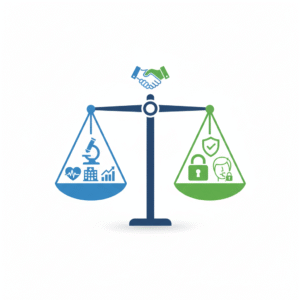
These issues offer rich opportunities for classroom debate about the balance between privacy and prevention.
Classroom Investigation: Who Benefits from Big Data?
Aim: To help students critically evaluate how big data can improve health outcomes, reduce costs, and raise ethical challenges.
Activity steps:
- Provide students with an AIHW dataset (e.g., physical activity by socioeconomic status or obesity by remoteness).
- Group analysis – Each group identifies trends (e.g., who is most at risk of poor health outcomes?).
- Design a health initiative – Groups propose a strategy that uses big data insights to improve outcomes for the identified population.
- Ethical reflection – Students critique their initiative by addressing:
- How would the data be collected?
- What privacy measures would be required?
- Could this widen or reduce health inequities?
- Class debate – “Does the benefit of big data outweigh the risks to privacy?”
Curriculum links:
- HM-12-02: examines how technology and data can achieve better health for all Australians.
- HM-12-06: critically analyses the relationships and implications of health and movement concepts.
- HM-12-09: proposes and evaluates solutions to complex health and movement issues.
- HM-12-10: analyses a range of courses to make conclusions and judgments about health and movement concepts.
This activity goes beyond identifying trends, requiring students to apply, evaluate, and critique, mirroring the type of thinking required for success in the HSC.
Final Thoughts
Big data is transforming health in Australia, offering opportunities for more efficient, targeted, and effective prevention and treatment. At the same time, it raises fundamental questions about privacy, equity, and ethics. For HMS teachers, embedding this content is not just about explaining technology, it is about equipping students to critically examine how data-driven decisions shape health outcomes now and into the future.
By using real datasets, case studies, and inquiry-based activities, teachers can move students from surface knowledge to deep understanding, ensuring they are prepared not only for the HSC, but to navigate a health landscape increasingly defined by big data.
References
Australian Bureau of Statistics. (2022). National health survey: First results, 2020–21. ABS. https://www.abs.gov.au/statistics/health
Australian Institute of Health and Welfare. (2023). Digital health in Australia. AIHW. https://www.aihw.gov.au/reports/digital-health
Australian Institute of Health and Welfare. (2024). Australia’s health 2024. AIHW. https://www.aihw.gov.au/reports/australias-health
Belle, A., Thiagarajan, R., Soroushmehr, S. M. R., Navidi, F., Beard, D. A., & Najarian, K. (2015). Big data analytics in healthcare. BioMed Research International, 2015, 370194. https://doi.org/10.1155/2015/370194
My Health Records Act 2012 (Cth). https://www.legislation.gov.au/Details/C2023C00243
Organisation for Economic Co-operation and Development. (2021). Health data governance: Privacy, monitoring and research. OECD Publishing. https://www.oecd.org/health
Pang, P. C.-I., McKay, D., Chang, S., Chen, Q., Zhang, X., & Cui, L. (2020). Privacy concerns of the Australian My Health Record: Implications for other large-scale opt-out personal health records. Information Processing & Management, 57(6), 102364. https://doi.org/10.1016/j.ipm.2020.102364
Raghupathi, W., & Raghupathi, V. (2014). Big data analytics in healthcare: Promise and potential. Health Information Science and Systems, 2(3), 1–10. https://doi.org/10.1186/2047-2501-2-3
World Health Organization. (2022). Big data and AI in health: Applications and challenges. WHO. https://www.who.int/publications