
Advice to CAFS Teachers: Rethinking Assessment Without the IRP
Flexible Assessment for CAFS in 2025: What the NESA Rules Really Say
While the new NESA rules allow flexibility and technically mean the Independent Research Project (IRP) no longer has to be assessed as a formal internal task, there is an important professional and pedagogical consideration:
How can we authentically and rigorously assess the “Skills in critical thinking, research methodology, analysing, and communicating” (60% weighting) without the IRP or its essential components?
The Core Skills—Why the IRP Has Been Essential
The IRP has traditionally provided students with an authentic, process-based opportunity to:
- Design research questions
- Apply ethical research principles
- Develop and implement data collection tools
- Analyse real data
- Communicate findings appropriately
These are not “add-ons”—they are central to the skills weighting NESA expects to be assessed at the HSC level.
(CAFS Stage 6 Syllabus)
Is Omission Really Feasible?
If the IRP is not included as a formal assessment task:
- Can any alternative really replicate the depth and authenticity of research methodology skills?
- Will teachers and faculties be able to justify, in a standards-based evidence environment, that students were genuinely assessed in all critical research skills?
(NESA ACE Rules for Assessment)
Rethinking Your Assessment Program: Key Questions for Teachers
Before removing the IRP from formal assessment, consider:
- Will your alternate task(s) require students to design research tools, analyse both primary and secondary data, consider ethics, and communicate findings in depth?
- Could you defend your assessment program as robust, rigorous, and compliant if reviewed by NESA or your Head of Department?
IRP Alternatives: Can They Measure Up?
If you were to replace the IRP with, say, a Research Skills Extended Response in an exam or minor project:
- Would students experience authentic research planning, data collection, or real analysis?
- Or will most tasks default to theoretical, superficial “research methods” questions with no real-world engagement?
Constructing Your Assessment Schedule: What Must Be Assessed, and How Much?
- You are required to assess research methodology skills, but not through a full IRP for every student.
(Assessment & Reporting in CAFS) - NESA limits the assessed IRP or research skills component to a maximum of 20% of the total internal assessment for HSC CAFS.
- You can select specific parts of the IRP or research methodology process for formal assessment, rather than the whole task.
- Other research and inquiry skills should still be developed and practised in class, but need not be double-assessed.
Why Retain IRP-Based Assessment? Leading Assessment Design
The IRP uniquely develops and evidences the full suite of research methodology skills demanded by the 60% “skills” component:
- No other single activity better equips students to meet outcomes related to forming research questions, using ethical methodologies, analysing authentic data, and communicating findings.
- Formal assessment of IRP elements provides a standards-based record if schools face scrutiny on assessment design.
(Record of Changes for CAFS)
Strategies to Embed the IRP—Without Burning Out
| Approach | What It Involves | Strengths | Policy Alignment |
|---|---|---|---|
| Mini-IRP Task | Focus on distinct stages (e.g. proposal + data analysis report) | Depth in chosen skills; manageable weighting | Capped at 20% of assessment |
| Staged “Research Skills” Tasks | Split skills across tasks—plan in one, data collection in another | Clear mapping to outcomes; avoids “double assessment” | Each task targets only part of the IRP; compliant |
| Integrated Assessment | Research skills embedded within broader extended responses or projects | Allows curriculum integration; authentic contexts | Must ensure skills are directly evidenced |
| Collaborative Project (with individual accountability) | Team-based inquiry with individual submission components | Fosters teamwork, individual assessment clear | All students must evidence required skills |
Practical Example Assessment Task
Research Methods Investigation (Suggested Design):
- Students formulate a research question, design a survey or interview, conduct sample data collection, and write up their process and findings.
- Weight: 15% (within NESA’s max 20%)
- Marking criteria specifically aligned to skills in critical thinking, research methods, and communication per syllabus outcomes.
- Assessment schedule clearly links task sections to the 60% “skills” component weighting.
(NESA CAFS Syllabus)
Best Practice Principles for CAFS Assessment
- Transparency: Explicitly show how every assessed skill maps to syllabus outcomes and component weightings.
- Manageability: Keep assessed tasks focused; do not overextend students or staff.
- Authenticity: Give all students meaningful opportunities to engage in actual research processes—not just theoretical exercises.
- Documentation: Record your rationale and NESA notifications—demonstrate compliance and educational intent if reviewed.
(Formal assessment programs and tasks – ACE Rule)
Final Guidance to the Profession
Despite NESA’s and ACE’s flexibility, the profession’s leadership lies not in doing less, but in doing what’s right for student learning and standards. Integrating the IRP—fully, as a mini-project, or through staged tasks—remains the gold standard for authentic assessment of research methodology in CAFS.
It is also the clearest way to showcase deep student learning.
Challenge your team:
How are you providing every student with the chance to authentically engage in—and be formally recognised for—the full range of research methodology skills? If your assessment schedule answers that with clarity and integrity, you are not just meeting policy but leading it.
Continue the Conversation at Our Conference
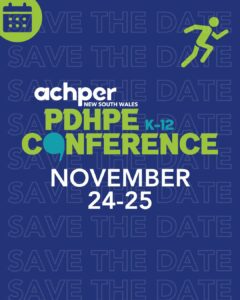
If this topic is on your radar, you’re not alone. Join us at the ACHPER NSW K–12 PDHPE Conference this November, where we’ll explore best practice in assessment design and unpack how schools are adapting to these changes in real-time.