
Stage 6 Assessment Changes in HMS and CAFS: What Teachers Need to Know
Recent updates to the Assessment Certification Examination (ACE) requirements for Year 11 and 12 have introduced greater flexibility for both HMS and CAFS. These changes mean that some tasks previously seen as mandatory components – such as the Depth Studies (DS) and Collaborative Investigation (CI) in HMS, and the Independent Research Project (IRP) in CAFS – are no longer required to be included as formal assessment tasks.
However, while the assessment structure has changed, the expectations around skill development and course weightings have not.
What’s Changed in Stage 6 HMS and CAFS Assessment?
- Schools now have greater authority to determine the number, type, and weighting of assessment tasks in both HMS and CAFS.
- Teachers may choose to follow or adapt the sample assessment programs provided by NESA.
- Some previously mandated tasks are now optional for formal assessment, including:
- The Collaborative Investigation in Year 11 HMS
- Depth Studies in Year 12 HMS
- The Independent Research Project in CAFS
If you’re reviewing your assessment strategy for Year 12, our HMS Program Package offers a ready-to-adapt unit outline, mapped outcomes, and skill-focused tasks aligned with the new flexibility.
What Hasn’t Changed?
- All indicative hours still apply:
- Programming, teaching, and assessment must continue to reflect the mandated course components:
Why the IRP, CI and DS Still Matter
While the shift allows for assessment flexibility, there are key pedagogical considerations for teachers:
- In HMS, the CI and DS provide opportunities for students to apply course content to real-world contexts, fostering transferable skills in a structured and collaborative environment.
- In CAFS, the IRP has been a long-standing vehicle for authentic, process-driven learning that supports deep skill development in research and critical thinking.
- These are not simply tasks – they are vehicles for skills development, especially in areas that are harder to replicate through traditional testing or content-heavy tasks.
- Without them, how will we ensure students are genuinely developing and demonstrating critical course outcomes in a rigorous, evidence-based manner?
What Should Schools Do Moving Forward?
This change provides an opportunity for schools to revisit and refine their assessment programs – but not to sideline these rich learning experiences altogether.
We’ll be releasing separate blog posts soon with subject-specific advice for designing assessment programs in HMS and CAFS – stay tuned.
Need help reworking your assessment plans? Check out our upcoming Professional Learning Workshops.
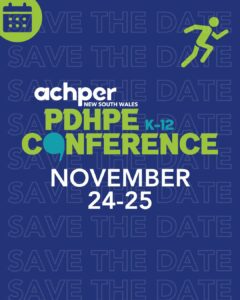
K-12 PDHPE Conference – Don’t Miss Out
This conversation will continue at our annual K–12 PDHPE Conference, where we’ll dive deeper into curriculum updates, best practice programming, and hands-on strategies for Stage 6.
Want updates delivered straight to your inbox?
Sign up to our newsletter below to get the latest blog posts, resources, and teaching tools as soon as they’re released.